
Rotational Molded vs Injection Molded Pickleball Balls: Which Is B
If you’re planning to launch your own pickleball brand, choosing the right ball is just as important as selecting the right paddle. One of the first decisions you’ll face is whether to use rotational molded or injection molded pickleball balls.
Although they may look similar, these two manufacturing methods produce different levels of durability, consistency, playing performance and production cost.
In this guide, we’ll explain how each process works, compare their advantages and disadvantages, and help you decide which option best fits your OEM or private label pickleball business.
Quick Take
- Rotational molded balls offer superior durability and more consistent flight, making them the preferred choice for premium brands and tournament play.
- Injection molded balls are more cost-effective and are ideal for training, promotional products and entry-level markets.
- Both manufacturing methods can support OEM customization, including custom colors, logos and packaging.
What Is a Rotational Molded Pickle
Rotational molding is a manufacturing process that creates a seamless pickleball by heating plastic powder inside a rotating mold. As the mold rotates, the material coats the inner surface evenly, resulting in a one-piece ball with uniform wall thickness.
Because there is no visible seam, rotational molded balls are known for their excellent roundness and consistent bounce.
These balls are widely used for:
Tournament play
Premium pickleball brands
Clubs and sports facilities
Professional training
For brands focused on performance and long-term durability, rotational molding is often the preferred manufacturing method.
What Is an Injection Molded Pickleball?
Injection molding uses two precision molds to produce separate halves of the ball. After molding, the halves are joined together to create the finished product.
This process offers several advantages:
- Faster production
- Lower manufacturing costs
- High production efficiency
- Stable product quality
Because of its cost advantages, injection molded pickleballs are commonly used for:
- Training programs
- Recreational play
- Promotional giveaways
- Entry-level product lines
Modern injection molding technology has improved significantly, allowing many high-quality recreational balls to perform well for everyday use.
Rotational Molded vs Injection Molded: Key Differences
When comparing the two manufacturing methods, there is no absolute “best” option. The right choice depends on your target market and brand positioning.
| Feature | Rotational Molded | Injection Molded |
|---|---|---|
| Construction | Seamless | Two-piece |
| Durability | Excellent | Very Good |
| Flight Consistency | Excellent | Good |
| Roundness | Excellent | Very Good |
| Cost | Higher | Lower |
| Production Speed | Medium | Fast |
| Best For | Premium Brands | Training & Entry-Level |
Which One Should Your Brand Choose?
If your goal is to create a premium pickleball brand that competes in clubs or tournaments, rotational molded balls are usually the better investment. Their seamless construction provides more consistent bounce, better durability and a high-quality playing experience.
On the other hand, if your business focuses on affordability, training equipment or promotional products, injection molded balls offer excellent value while maintaining reliable performance.
Many successful brands even offer both options to meet different customer needs.
OEM Customization Options
At GloryPaddle, we provide flexible OEM and private label solutions for pickleball brands worldwide.
Our customization services include:
- Custom colors
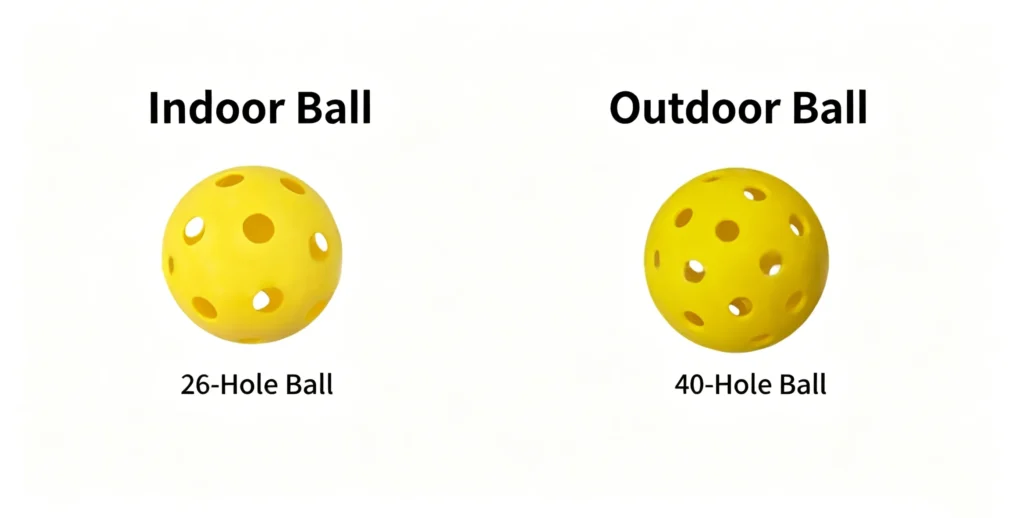
- 26-hole and 40-hole designs
- Logo printing
- Private label packaging
- Mesh bags
- Retail boxes
- Bulk wholesale production
Whether you’re launching a new brand or expanding your existing product line, we can help you build products that match your market positioning.
Expert Tip
Before selecting a manufacturing method, consider your target customers rather than simply choosing the lowest production cost. Premium players value consistency and durability, while recreational users often prioritize affordability. Aligning your product with your customers’ expectations is the key to building a successful pickleball brand.
Ready to build your own pickleball paddle line?
Tell us your target specs, quantity and market. Our engineering team will reply with a factory-direct quote and a sampling plan within 24 hours.
Prefer to talk first? WhatsApp +86 136 3257 3494 or email sales@glorypaddle.com — we usually reply within a few hours.