
Silicon Carbide Pickleball Paddle Surface: Two Surface Processes Brands Should Know
Silicon Carbide (SiC) pickleball paddle surfaces are becoming an interesting option for brands looking for a differentiated paddle surface. But the silicon carbide material itself is only part of the story.
How the SiC surface is integrated and finished can also affect the consistency, feel and durability of the playing surface.
At GloryPaddle, our factory currently works with two main Silicon Carbide surface processes:
- Woven-texture surface process
- Spray-applied surface process
Understanding the difference can help brands choose the right surface construction for their target paddle.
What Is a Silicon Carbide Pickleball Paddle Surface?
Silicon Carbide, commonly abbreviated as SiC, is a hard material that can be incorporated into a pickleball paddle surface to create a textured ball-contact interface.
Compared with a conventional smooth paddle face, a textured SiC surface can provide:
- Strong ball grip
- Spin potential
- A distinctive surface feel
- A differentiated product appearance
- An additional option for premium paddle development
However, not all SiC paddle surfaces are manufactured in exactly the same way. The surface process plays an important role in the final product.
Two Silicon Carbide Surface Processes
At our manufacturing facility, we currently work with two main approaches.
1. Woven-Texture Surface Process
The first approach uses a woven-texture surface structure. The surface has a more integrated and consistent texture, rather than simply applying a textured coating onto the outside of the paddle. For brands looking for a more stable and durable surface construction, this is currently our preferred direction.
Key characteristics:
- More consistent surface texture — the woven texture provides a relatively stable surface structure across the paddle face.
- Better wear resistance — based on our manufacturing experience, the woven-texture process offers better wear resistance than a spray-applied surface.
- Stable playing feel — because the texture is more integrated into the paddle construction, it can provide a more consistent contact feel during use.
- Suitable for premium paddle development — for brands developing a premium or long-term product line, this process can be a strong option to consider.
2. Spray-Applied Surface Process
The second approach is a spray-applied SiC surface process. In this process, the textured material is applied to the paddle surface during the finishing process.
This approach provides flexibility in surface treatment and can be suitable for certain product positioning and development requirements.
However, because the texture is applied as a surface treatment, wear characteristics can differ from a more integrated woven-texture construction.
For brands that place a higher priority on long-term texture retention, we generally recommend evaluating the woven-texture option.
Woven Texture vs. Spray-Applied SiC
| Feature | Woven-Texture SiC | Spray-Applied SiC |
|---|---|---|
| Surface structure | Integrated texture | Applied surface treatment |
| Texture consistency | More stable | Depends on finishing process |
| Wear resistance | Higher based on our production experience | More dependent on surface coating |
| Playing feel | Stable and consistent | Depends on surface treatment |
| Product positioning | Premium / performance | Flexible / differentiated |
| OEM/ODM | Available | Available |
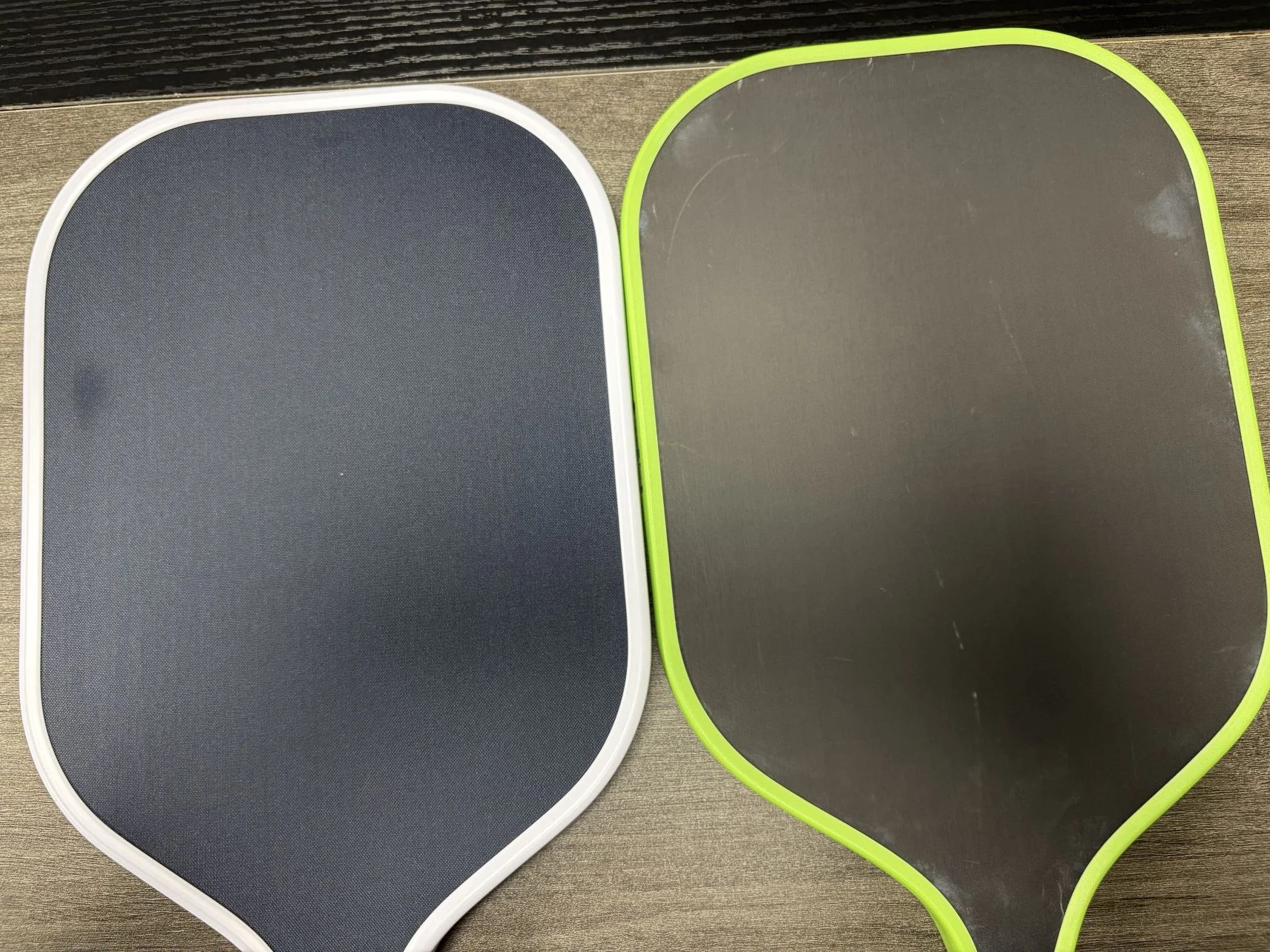
The right choice depends on the target product, playing characteristics and expected usage.
Why Surface Construction Matters
When brands compare pickleball paddles, they often focus on the material itself. But for a textured paddle, the surface construction can be just as important. Two paddles may both be described as having a “Silicon Carbide surface,” while their manufacturing processes are different. This can affect:
- Surface texture
- Ball contact
- Spin potential
- Surface consistency
- Wear characteristics
- Long-term product performance
For this reason, when developing a private-label SiC paddle, we recommend evaluating the actual surface construction, rather than looking only at the name of the material.
Silicon Carbide + Carbon Fiber
Silicon Carbide can also be developed together with carbon fiber paddle constructions. For example, a paddle can combine:
Carbon Fiber Construction + Silicon Carbide Surface + EPP or PP Core
This allows brands to develop different combinations based on their target price, playing characteristics and product positioning. At GloryPaddle, we can evaluate different paddle constructions according to the customer’s requirements.
Which SiC Surface Process Should Your Brand Choose?
There is no single solution for every paddle. If your priority is:
- Long-term surface durability — the woven-texture process is worth considering because of its stronger wear resistance based on our production experience.
- Flexible surface development — a spray-applied process may provide more flexibility for certain product designs and surface treatments.
- Premium product positioning — a woven-texture SiC construction can be considered for brands developing a higher-end performance paddle.
Develop Your Silicon Carbide Paddle With Us
GloryPaddle provides OEM and ODM pickleball paddle development for brands, distributors and private-label companies. Our current Silicon Carbide paddle platform can be customized in areas including:
- Silicon Carbide surface
- Surface process
- Paddle shape
- Core material
- Paddle thickness
- Weight and balance
- Edge guard
- Handle and grip
- Logo and graphics
- Packaging
- Carry bag and accessories
We can also evaluate your target specifications and recommend a suitable existing paddle platform or discuss a new development project.
Looking Ahead to 2027
Silicon Carbide is becoming an interesting surface option for the next generation of pickleball paddles. For brands planning their 2027 paddle collections, understanding the difference between surface materials and surface processes can help create a more differentiated product. At GloryPaddle, we are continuing to develop Silicon Carbide surface solutions with a focus on surface consistency, durability and OEM/ODM flexibility.
Interested in Developing a Silicon Carbide Paddle?
Tell us about your target paddle — surface process, core, shape and budget — and our team will get back to you with a suitable proposal.